
If you are searching for “Peptides Ireland,” you are likely looking for a reliable, transparent, and compliant way to source high-purity research peptides with verified Certificates of Analysis (COAs) and discreet tracked shipping directly from an Irish warehouse.
This guide answers exactly what legitimate peptide sourcing in Ireland entails: it means prioritizing third-party HPLC/MS testing over marketing claims, understanding strict Research Use Only (RUO) compliance, selecting the right vial sizes for your specific assays, and following proper storage protocols to preserve bioactivity from dispatch to lab bench.
At Research Peptides Ireland, our catalogue includes popular research compounds such as Semaglutide, Tirzepatide, Retatrutide, BPC-157, GHK-Cu, TB-500, CJC-1295, Ipamorelin, GHRP-2 and GHRP-6, supplied for laboratory and scientific research purposes only.
Whether you are studying metabolic pathways, tissue regeneration, or neuroendocrine signaling, this comprehensive resource will help you navigate the Irish research peptide landscape safely, legally, and effectively.
What Are Peptides?
Peptides are short chains of amino acids linked together by peptide bonds. Amino acids are the building blocks that make up proteins, so peptides can be thought of as smaller molecular structures related to proteins.
Researchers study peptides because their structures can interact with receptors, enzymes, proteins and other biological molecules.
Depending on the peptide, research may focus on areas such as:
- Receptor biology
- Cellular signalling
- Molecular biology
- Metabolic research
- Growth-factor research
- Neuroscience
- Peptide chemistry
- Protein interactions
- Structure-function relationships
- TGF-β signalling
- GPCR research
Not every compound described as a research peptide is technically a peptide. Some research products, such as AICAR and 5-Amino-1MQ, are small molecules, while others such as ACE-031 and Follistatin 344 are recombinant or protein-based research materials.
Understanding the exact identity of each compound is therefore important when selecting materials for laboratory research.
Buy Research Peptides Ireland
Research Peptides Ireland provides a growing catalogue of research compounds covering several areas of peptide science.
Popular products include:
- Semaglutide
- Tirzepatide
- Retatrutide
- BPC-157
- TB-500
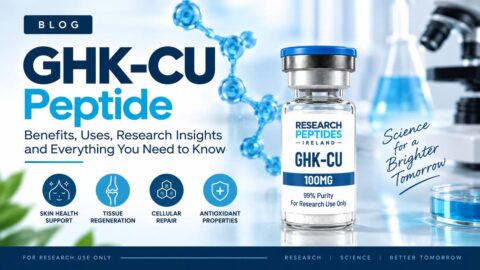
- GHK-Cu 100mg
- CJC-1295 No DAC
- Ipamorelin 5mg
- GHRP-2 10mg
- GHRP-6 10mg
- IGF-1 LR3 1mg
- IGF-1 DES 1mg
- Follistatin 344 1mg
- ACE-031 1mg
Each compound has its own molecular structure, research applications and characteristics, so researchers should select products according to the requirements of their particular project.
Popular Peptides for Research in Ireland
Different research peptides are relevant to different areas of science. Some are studied mainly in metabolic signalling, while others are associated with receptor biology, growth-factor research or cellular processes.
Here are some of the key research compounds available in our catalogue.
Semaglutide

Semaglutide is a modified peptide analogue studied primarily in relation to the GLP-1 receptor (GLP-1R).
It is particularly relevant to research involving:
- GLP-1 receptor biology
- GPCR signalling
- Peptide-receptor interactions
- Cellular signalling
- Peptide engineering
- Structure-function research
Our Semaglutide research peptide is available in 5mg, 10mg, 15mg, 20mg and 30mg formats.
Semaglutide is one of the most recognizable compounds in modern peptide and metabolic research, making it an important reference compound for researchers studying GLP-1 receptor signalling.
Tirzepatide
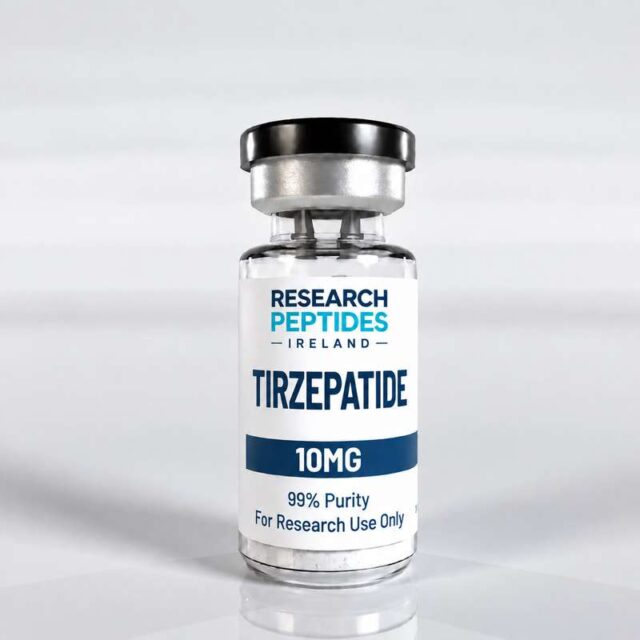
Tirzepatide is a synthetic modified peptide designed to interact with both the GIP receptor and GLP-1 receptor.
This gives researchers a useful model for studying dual-receptor peptide signalling.
Research areas include:
- GIP receptor biology
- GLP-1 receptor biology
- GPCR signalling
- Peptide-receptor interactions
- Cellular signalling
- Peptide structure-function studies
Tirzepatide is available in 10mg, 15mg, 20mg, 30mg, 45mg and 60mg formats.
Retatrutide

Retatrutide is another important research peptide in the metabolic signalling field.
Unlike Semaglutide and Tirzepatide, Retatrutide is designed to interact with three receptor systems:
- GLP-1 receptor
- GIP receptor
- Glucagon receptor
This makes Retatrutide particularly interesting for researchers studying multi-receptor peptide signalling.
Available research formats include:
10mg, 20mg, 30mg, 50mg and 60mg.
Research applications include GPCR biology, receptor interactions, cellular signalling and peptide structure-function studies.
BPC-157

BPC-157 is a synthetic 15-amino-acid peptide that has attracted substantial interest in preclinical peptide research.
Its sequence is:
GEPPPGKPADDAGLV
Researchers have investigated BPC-157 in areas including peptide biology, cellular signalling and experimental tissue-related models.
Our BPC-157 research peptide is available in:
- 10mg
- 20mg
- 40mg
As with all products in this catalogue, BPC-157 is supplied for laboratory research purposes only.
TB-500

TB-500 is a research compound commonly associated with thymosin beta-4-related peptide research.
The term TB-500 can refer to different peptide preparations, so researchers should pay attention to the exact identity and documentation of the material being studied.
Research involving thymosin beta-4-related compounds includes:
- Actin-related biology
- Cytoskeletal research
- Cell migration research
- Protein-peptide interactions
- Cellular signalling
The available product is supplied in a 10mg research format.
GHK-Cu

GHK-Cu 100mg is a copper-containing tripeptide complex based on Gly-His-Lys.
GHK-Cu is particularly interesting in research involving:
- Copper coordination
- Metallopeptide chemistry
- Molecular signalling
- Cellular biology
- Extracellular matrix research
- Protein and peptide interactions
The GHK-Cu catalogue also includes a 50mg research format.
Because GHK-Cu contains a metal ion coordinated with a peptide, it provides researchers with a useful model for studying metallopeptide chemistry.
Growth Hormone and Peptide Receptor Research
Another major area of peptide research involves growth-factor and receptor signalling.
Our catalogue includes several compounds relevant to this field.
CJC-1295

CJC-1295 No DAC 10mg is a synthetic GHRH-related peptide analogue studied in relation to the GHRH receptor and associated signalling pathways.
We also offer CJC-1295 with DAC 5mg, providing researchers with different CJC-1295-related molecular designs for comparative research.
Research areas include:
- GHRH receptor biology
- Peptide-receptor interactions
- Endocrine signalling
- Growth-factor research
- Structure-function studies
Ipamorelin
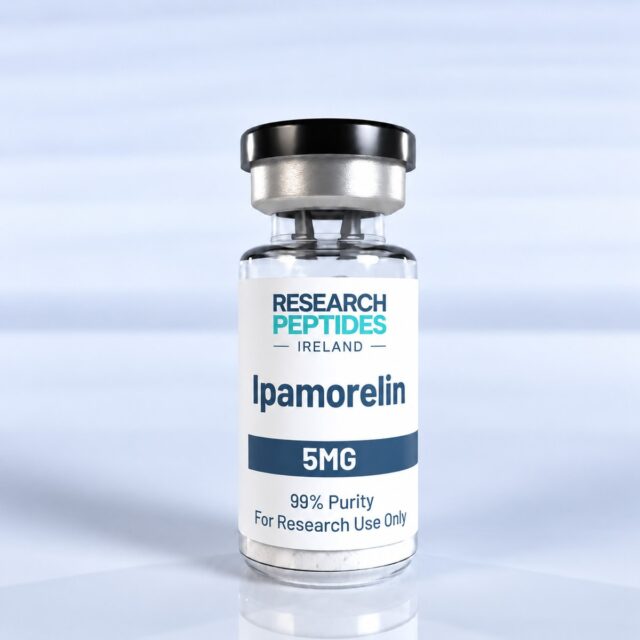
Ipamorelin 5mg is a synthetic pentapeptide studied in relation to the growth hormone secretagogue receptor (GHS-R).
Its research applications include:
- GHS-R biology
- Peptide-receptor interactions
- Ghrelin-related signalling
- GPCR research
- Endocrine signalling
Ipamorelin can also be examined alongside other research peptides when studying different receptor systems.
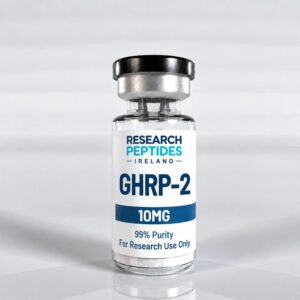
GHRP-2
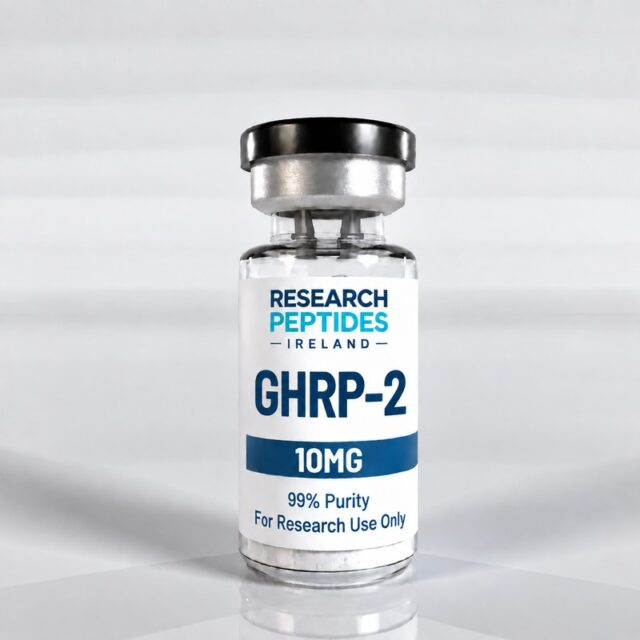
GHRP-2 10mg is a synthetic hexapeptide studied in relation to GHS-R and growth hormone secretagogue research.
Its commonly reported sequence is:
D-Ala-D-2-Nal-Ala-Trp-D-Phe-Lys-NH₂
GHRP-2 is relevant to research involving peptide-receptor interactions, GPCR signalling, endocrine biology and peptide structure-function relationships.
GHRP-6
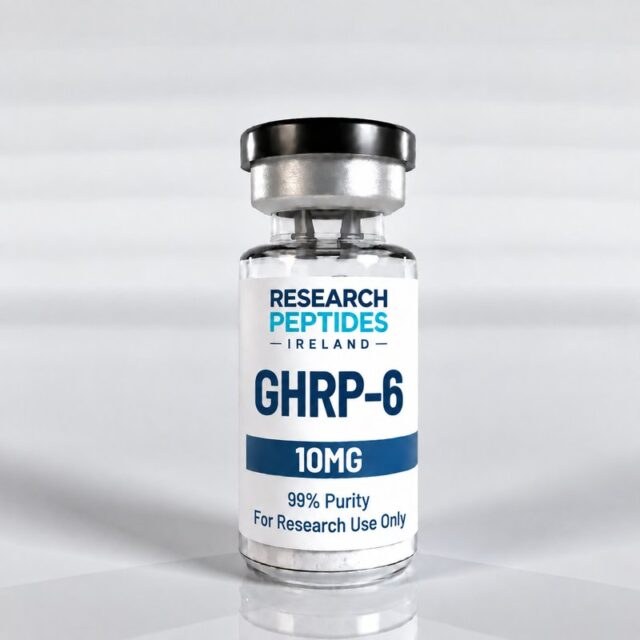
GHRP-6 10mg is another synthetic growth hormone-releasing peptide.
It is studied in relation to GHS-R and related peptide signalling pathways.
Researchers can compare GHRP-6 with GHRP-2 to investigate how differences in peptide structure influence receptor interactions.
IGF-1 and Growth-Factor Research
Research Peptides Ireland also provides compounds relevant to IGF-related research.
IGF-1 LR3
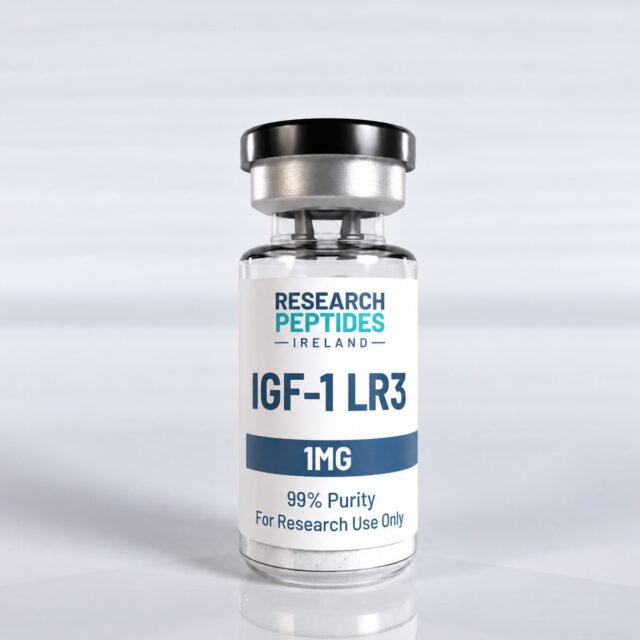
IGF-1 LR3 1mg is a modified IGF-1 analogue studied in relation to IGF-1 receptor signalling.
Research areas include:
- IGF-1 receptor biology
- Growth-factor signalling
- PI3K/Akt pathways
- MAPK/ERK pathways
- Cellular signalling
- Protein structure-function research
IGF-1 DES

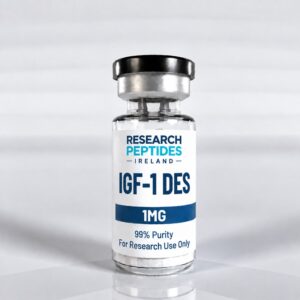
IGF-1 DES 1mg, also known as Des(1-3)IGF-1, is a modified form of IGF-1 in which the first three residues of mature IGF-1 are removed.
This provides researchers with a useful molecular model for investigating how changes to the IGF-1 structure influence receptor interactions and signalling.
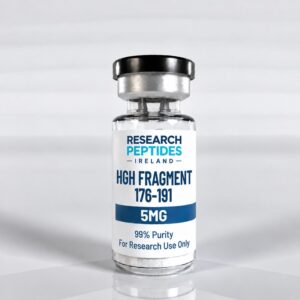
HGH Fragment 176-191
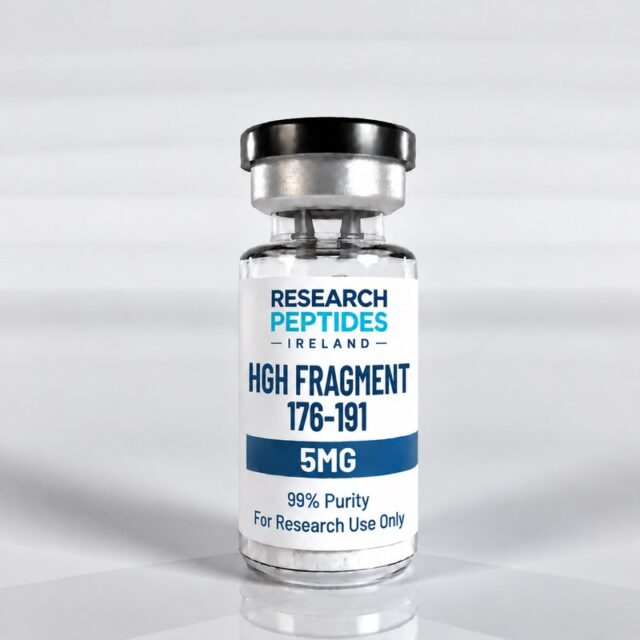
HGH Fragment 176-191 is a 16-amino-acid fragment corresponding to residues 176–191 of human growth hormone.
The peptide can be studied in research involving:
- Protein fragments
- Peptide chemistry
- Sequence-function relationships
- Molecular characterization
- Synthetic peptide research
The available research format is 5mg.
Follistatin and ActRIIB Research
Some research compounds in the catalogue are larger proteins rather than conventional short peptides.
Follistatin 344

Follistatin 344 1mg is a 344-amino-acid form of follistatin.
Follistatin is a secreted glycoprotein studied for its interactions with activin and other members of the TGF-β superfamily.
Research areas include:
- Activin binding
- Protein-protein interactions
- TGF-β signalling
- Ligand binding
- Protein structure
- Cellular signalling
ACE-031
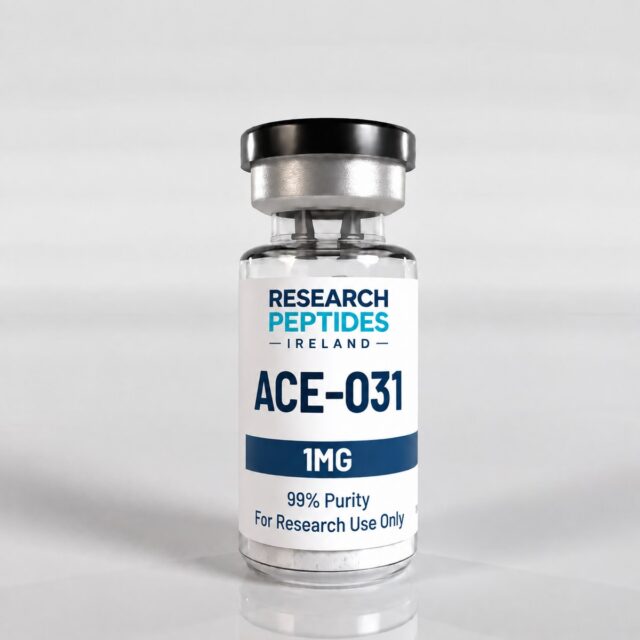
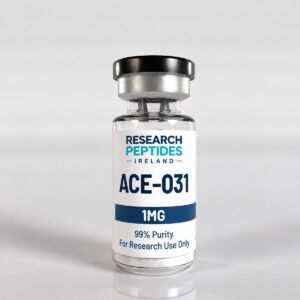
ACE-031 1mg is an ActRIIB-Fc recombinant fusion protein.
Unlike conventional synthetic peptides, ACE-031 is a larger protein construct designed around the extracellular domain of activin receptor type IIB.
It is studied as a soluble ligand-trap research tool in areas involving:
- Myostatin
- Activin
- ActRIIB
- TGF-β superfamily signalling
- Protein-ligand interactions
- Recombinant protein research
Why Researchers Study Peptides
Peptides provide researchers with useful molecular tools because their amino-acid sequences can be designed, modified and studied in controlled experimental systems.
Depending on the compound, researchers can investigate:
Receptor Biology
Many peptides interact with specific receptors. Studying these interactions can help researchers understand receptor structure, binding and signalling.
Cellular Signalling
Peptides can be used to investigate how receptor activation connects with intracellular signalling pathways.
Protein Interactions
Peptides can serve as models for studying interactions between proteins, receptors and signalling molecules.
Structure-Function Relationships
Small changes to an amino-acid sequence can change the properties of a peptide. Researchers can use modified peptides to study these relationships.
Peptide Chemistry
Synthetic peptides are also important tools for studying synthesis, purification, characterization and molecular structure.
Choosing Research Peptides in Ireland
When choosing a research peptide, the first step is to identify the exact compound needed for the experiment.
Researchers should consider:
1. Molecular Identity
Check the complete product name, sequence or construct and any relevant identifiers.
A similar-sounding product may not have the same molecular structure.
2. Quantity
Select the research quantity appropriate for the planned laboratory work.
Our catalogue includes different formats across different products, ranging from smaller research quantities to larger options.
3. Analytical Documentation
Clear documentation is important for laboratory research.
Depending on the product, documentation may include:
- Certificate of Analysis
- HPLC results
- Mass spectrometry
- Purity information
- Batch number
- Molecular-weight information
- Protein characterization
4. Storage Requirements
Different peptides and proteins can have different storage requirements.
Always follow the storage information supplied with the specific product.
5. Intended Research
The compound should match the scientific question being investigated.
For example, researchers studying GLP-1 receptor biology may look at Semaglutide, while researchers investigating GHS-R may consider compounds such as GHRP-2, GHRP-6 or Ipamorelin.
Research Peptides Ireland Catalogue
Our catalogue covers several major research areas.
| Research Area | Example Compounds |
|---|---|
| GLP-1 and metabolic signalling | Semaglutide, Tirzepatide, Retatrutide |
| Peptide and cellular biology | BPC-157, GHK-Cu, TB-500 |
| GHRH/GHS-R research | CJC-1295, Ipamorelin, GHRP-2, GHRP-6 |
| Growth-factor research | IGF-1 LR3, IGF-1 DES |
| Protein fragment research | HGH Fragment 176-191 |
| TGF-β research | Follistatin 344, ACE-031 |
| Neuroscience research | Selank, Semax, DSIP |
| Immune and peptide biology | Thymosin Alpha-1, LL-37, KPV |
| Mitochondrial research | MOTS-C, SS-31 |
| Peptide blends | Glow Blend, KLOW |
This broad catalogue allows researchers to explore different molecular systems from one research-focused source.
Peptides Ireland for Laboratory Research
Searching for peptides Ireland can bring up a wide range of products, but not every peptide belongs to the same scientific category.
Some are short synthetic peptides. Others are modified peptide analogues, peptide blends, small molecules or recombinant proteins.
That is why clear product information is important.
At Research Peptides Ireland, each product page is designed to explain the compound in simple language while providing useful information about its molecular identity, research area, available quantity and laboratory-use status.
Research Use Only
All products available through Research Peptides Ireland are intended for laboratory and scientific research purposes only.
They are not intended for human or veterinary administration and are not presented as products for diagnosing, treating, curing or preventing any disease or medical condition.
Researchers should use appropriate laboratory procedures and follow applicable institutional and regulatory requirements when working with research compounds.
Frequently Asked Questions About Peptides Ireland
What are research peptides?
Research peptides are peptide-based compounds used as laboratory tools to investigate biological, chemical and molecular processes.
Where can I buy research peptides in Ireland?
Research Peptides Ireland provides an Ireland-focused catalogue of research peptides and related research compounds, including Semaglutide, Tirzepatide, Retatrutide, BPC-157, GHK-Cu, CJC-1295, Ipamorelin and other products.
What are the most popular research peptides?
Popular research compounds include Semaglutide, Tirzepatide, Retatrutide, BPC-157, GHK-Cu, TB-500, CJC-1295 and Ipamorelin. Different compounds are relevant to different research areas, so popularity does not determine which compound is appropriate for a particular experiment.
Are all research peptides the same?
No. Peptides can differ significantly in amino-acid sequence, molecular structure, receptor activity, size and research application.
Some products marketed alongside peptides are also small molecules or recombinant proteins rather than conventional peptides.
What is Semaglutide studied for?
Semaglutide is studied primarily in relation to GLP-1 receptor biology, GPCR signalling, peptide-receptor interactions and cellular signalling.
What is Tirzepatide studied for?
Tirzepatide is studied as a dual GIP and GLP-1 receptor-targeting peptide, making it relevant to research involving multi-receptor signalling.
What is Retatrutide studied for?
Retatrutide is studied as a peptide designed to interact with GLP-1, GIP and glucagon receptor systems.
What is BPC-157?
BPC-157 is a synthetic 15-amino-acid peptide studied in preclinical peptide and cellular research.
What is GHRP-6?
GHRP-6 is a synthetic hexapeptide studied in relation to GHS-R and peptide-receptor signalling.
What is GHRP-2?
GHRP-2 is another synthetic growth hormone-releasing peptide studied in relation to GHS-R, GPCR biology and peptide-receptor interactions.
What should I look for when buying research peptides?
Researchers should consider the exact molecular identity, available quantity, analytical documentation, batch information, storage requirements and intended research application.
Are the products for human use?
No. The products presented on this website are supplied for laboratory research purposes only and are not intended for human or veterinary administration.
Explore Research Peptides Ireland
Whether your research involves metabolic signalling, GLP-1 and GIP receptors, growth-factor biology, GHS-R, peptide chemistry, cellular signalling or TGF-β pathways, our catalogue provides a growing selection of research compounds.
Explore individual product pages to learn more about each compound, including its molecular characteristics, available sizes, research applications and laboratory-use information.